Is your flock ready for the next heat wave?


When temperatures climb into the 90s, our ducks become very predictable: they head for shade, water, and the coolest spots they can find.

Domestic ducks can handle summer weather remarkably well, but they depend on us to make the right resources available before the worst heat arrives. We put together a practical checklist based on what has worked for our flock through many hot, humid South Carolina summers.

Backyard ducks staying cool during hot summer weather

Is your flock ready for the next heat wave?

A few of the most important summer-care basics:

  • All-day shade with enough room for every duck.
  • Fresh drinking water in sturdy, no-tip bowls.
  • Clean, cool swimming water—ideally positioned in shade.
  • Good coop airflow and, during extreme heat, a safely positioned fan.
  • Supportive extras such as poultry electrolytes and water-rich treats (cukes & watermelon) your flock enjoys.

Keep an eye on the flock: open-mouth panting or drooping wings can be temporary responses to heat, but persistent signs—or one duck struggling while the others seem comfortable—deserve prompt attention.

See all 10 summer duck-care tips

Too many duck eggs? Put them to delicious use.

Peak laying season can turn the egg basket into a small avalanche. These three recipes can help.

Duck egg frittata with stinging nettle greens

An 11-duck-egg frittata

Uses 11 duck eggs.

The published recipe uses stinging nettles, bacon, onion, garlic, and cheddar—but the frittata format is wonderfully adaptable when you have cooked seasonal greens or vegetables to use. (Spinach is a great substitute for stinging nettle.)

Get the frittata recipe →
Duck egg Meyer lemon curd

Duck egg Meyer lemon curd

Uses 4 duck eggs.

You can buy Meyer—or regular—lemons at most grocery stores; you don’t need to grow your own.

Get the recipe →
Summer squash fritters with blueberry aioli made with duck eggs

Squash fritters + blueberry aioli

Uses 2 duck eggs total: one in the fritters and one in the aioli.

Get the recipe →

Stay cool and keep quacking,

Aaron & Susan

A little more duck goodness

The Impractical Guide to Raising Pet and Backyard Ducks book cover

Raise healthier, longer-lived ducks

Our practical—and appropriately impractical—guide to giving pet and backyard ducks their best lives.

Buy the duck book on Amazon →

As an Amazon Associate, we earn from qualifying purchases.

Duck My Life clothing and accessories

Duck My Life merch

Humorous duck clothing and accessories, with 10% of proceeds supporting waterfowl rescues.

Shop duck merch →

Tyrant Farms

We're educators and bloggers focused on the topics of raising pet/backyard ducks, no-dig organic gardening & rare edible plants, foraging, wild recipes, and related topics. Subscribe and join thousands of newsletter readers every week!

Read more from Tyrant Farms

When our fig trees start producing, they do not believe in moderation. Fortunately, ripe figs can move in almost any direction—into a soft whole-wheat cookie, a flourless crumble, a savory garden salad, or a dessert that lands somewhere between a cobbler and a Fig Newton. Whole-wheat Fig Newtons from scratch These homemade Newtons use 100% whole-wheat pastry flour and can be filled with fresh or dried figs. The overnight steaming step is the secret to their soft, familiar texture. Make the...
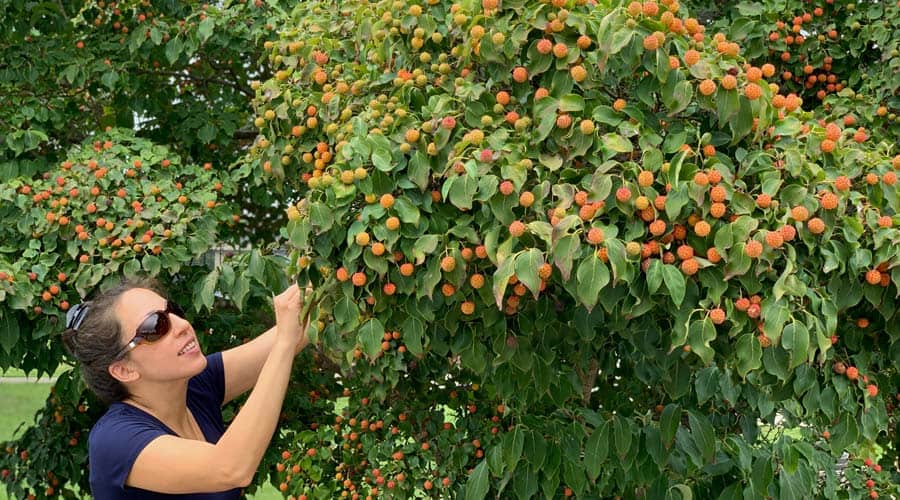
Late summer hides one of its strangest fruits in plain sight. Those bumpy orange-red fruits on landscape Kousa dogwoods can be delicious—but only after you have positively identified the tree and learned what ripe fruit looks and feels like. How to identify, harvest, and eat Kousa dogwood fruit In our Greenville, South Carolina area, the fruit typically begins ripening in late August. Ripe fruit is orange-red, slightly soft rather than squishy, and releases easily from the tree—or falls on...

If deer have discovered your garden, a single night can undo weeks of work. An adult deer can eat more than a dozen pounds of plant material a day. Add a few hungry friends, and your garden soon becomes an all-the-deer-can-eat buffet. Dad’s simple trick for keeping deer out After sprays, dog hair, and other deterrents failed, my dad tried something almost invisible: 15–30 pound test fishing line strung between 48-inch stakes around the plants he wanted to protect. The line sits about 3 feet...